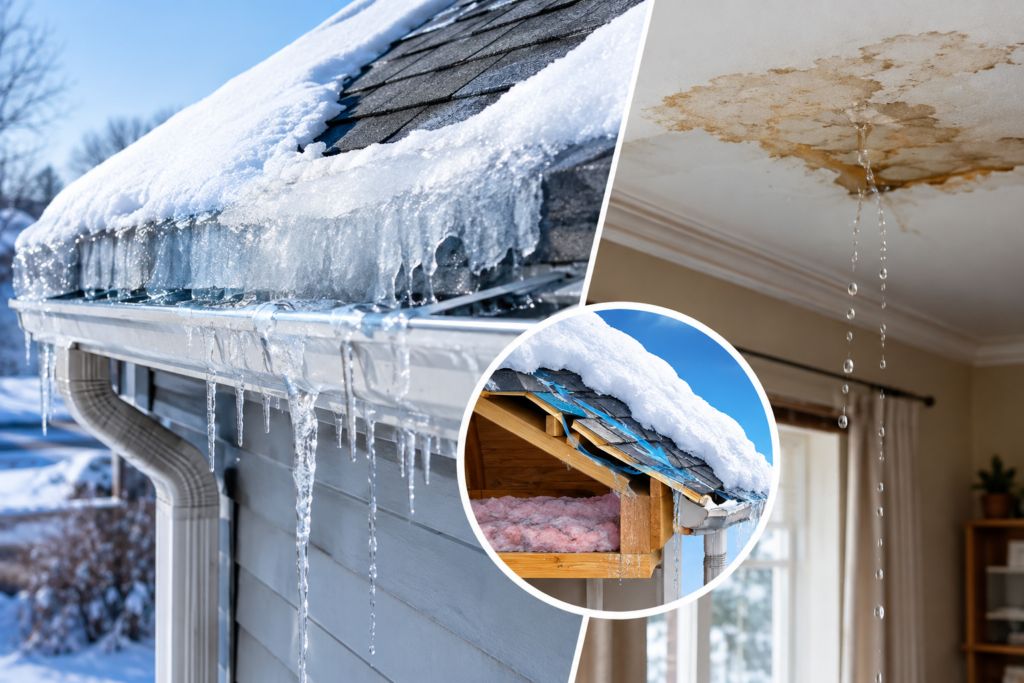
Every winter, millions of homeowners discover a wet ceiling, stained drywall, or warped flooring and have no idea the culprit was silently forming on their roof weeks earlier. Ice dams are one of the most destructive, misunderstood winter hazards a home can face. They don’t announce themselves with a sudden burst pipe or obvious leak. Instead, they quietly build pressure at your roofline, find every gap in your home’s envelope, and let water seep in while you’re sipping hot cocoa by the fire.
This guide breaks down exactly how ice dams form, why gutters play a critical role in the damage cycle, and what you can do right now to protect your home before this winter costs you thousands.
What Is an Ice Dam and Why Your Gutters Are Ground Zero
An ice dam is a ridge of ice that forms at the edge of your roof, typically along the overhang or directly inside your gutters. Understanding how it forms requires looking at what’s happening on your roof on a cold day even when it’s not snowing.
The Three-Stage Formation Process
- 1Heat escapes through your roof deckWarm air from your living space rises and leaks through insulation gaps, recessed lights, attic hatches, and plumbing penetrations. That heat warms the roof deck from below even when outside temperatures are well below freezing.
- 2Snow melts on the upper roof and refreezes at the edgeThe upper portion of your roof gets warm enough to melt snow. That meltwater flows downward but when it reaches the overhang (which sits above unheated space and stays cold), it refreezes instantly. Day after day, this builds into a solid ice ridge.
- 3Your gutters become a reservoir of trapped ice and waterGutters are exactly where this meltwater lands first. They freeze solid, completely blocking drainage. Now water has nowhere to go it backs up under your shingles and looks for any way into your home.
Key Insight
Ice dams can form even when temperatures never exceed 25°F outside all it takes is enough heat loss from your attic to melt the snow above. A poorly insulated home with only moderate snowfall can develop a serious ice dam in just 48 hours.
How Backed-Up Water Gets Inside Your Home
Here’s the part most homeowners don’t realize: water doesn’t need a big hole to enter your home. Roofing shingles are designed to shed water flowing downward they are not waterproof barriers against water that sits still or flows backward. When ice dams force meltwater to pool, it exploits every imperfection.
The Paths Water Takes
Backed-up meltwater commonly enters through:
- Under shingles at the eaves, where the overlap is minimal
- Through nail holes in the roof deck that were never sealed properly
- Around chimney and pipe flashings where caulk has cracked with age
- Through damaged or missing step flashing along dormers
- Via ice expansion that lifts and separates shingle courses
- Into the wall cavities if the dam extends down the gutter to exterior walls
Once water gets past the shingles, it hits the roof deck, finds a low point, and travels often several feet away from where it entered before dripping onto your insulation, ceiling joists, or drywall. This is why the visible damage (a wet spot on your bedroom ceiling) can appear far from the actual entry point (a failed flashing above the garage).
Important Warning
what happens inside your walls when water gets trapped. Water that travels through insulation and attic space before reaching your ceiling can remain hidden for weeks. By the time you notice a stain, mold may already be growing in your attic. Any signs of ceiling discoloration during or after winter should be investigated immediately.
The Real Damage Ice Dams Cause
The financial toll of ice dam water intrusion goes far beyond a simple roof repair. Here’s a realistic look at what homeowners face:
| Damage Type | Where It Occurs | Severity | Avg. Repair Cost |
|---|---|---|---|
| Shingle lifting & cracking | Roof eaves | Moderate | $300–$1,500 |
| Gutter detachment & warping | Entire gutter run | Moderate | $400–$2,000 |
| Roof deck rot | Eaves & overhangs | High | $1,000–$4,500 |
| Insulation saturation | Attic floor | High | $800–$3,000 |
| Ceiling & drywall damage | Top floor rooms | High | $500–$2,500 |
| Mold remediation | Attic, walls, ceilings | High | $1,500–$6,000+ |
| Interior flooring damage | Below leak origin | Moderate | $600–$3,500 |
A single winter season with a persistent ice dam left untreated can easily generate $5,000 to $15,000 in combined damages. And that’s before accounting for the secondary costs: temporary housing during repairs, contents replacement, increased insurance premiums, or a failed home inspection when you eventually sell.
For a deeper understanding of how prolonged water intrusion escalates into full structural and health hazards, the EPA’s Guide on Mold and Moisture in the Home is an essential resource that outlines exactly when and how mold growth becomes a health emergency after water exposure.
: how a small gutter repair can prevent expensive water damage
Warning Signs You Already Have a Problem
Ice dam damage is almost always underestimated because the visible signs lag behind the actual damage by days or weeks. Knowing what to look for can help you act before it gets worse.
Outside the Home
- Visible ridge of ice at the roof’s edge or hanging icicles from gutters
- Gutters pulling away from the fascia board under ice weight
- Gutters visibly overflowing with ice or packed snow
- Uneven snow melt pattern on your roof (bare patches near the ridge, deep snow at eaves)
- Icicles forming from soffit vents or behind gutters, not just from the gutter edge
Inside the Home
- Water stains or discoloration appearing on upper-floor ceilings
- Peeling paint or bubbling wallpaper near exterior walls on the top floor
- A musty smell in the attic or upper bedrooms in winter
- Frost or moisture on the underside of your roof deck (visible from the attic)
- Damp or compressed attic insulation directly above an exterior wall
: signs your gutters may have already caused water damage
Active dripping from your ceiling during a freeze-thaw cycle is an emergency. Turn off electricity to the affected area, place buckets to catch water, and call a water damage professional the same day. The longer water sits in your wall cavities, the more likely you are to face a mold remediation bill on top of everything else.
How to Prevent Ice Dams and Gutter Damage
Prevention is exponentially cheaper than repair. The good news is that most ice dam causes are fixable and most gutter-related damage is entirely avoidable with proper maintenance and the right upgrades.
Immediate Steps Before Each Winter
- Clean your gutters thoroughly in late fall packed leaves and debris become the nucleus around which ice forms fastest
- Inspect for gutter sagging or improper slope even slight backward pitch causes water to pool and freeze rather than drain
- Check that all downspouts extend at least 5–6 feet from your foundation
- Install gutter guards designed for cold climates to prevent debris buildup under ice
- Remove snow from lower roof edges after heavy snowfall using a roof rake (from the ground never climb a snowy roof)
Longer-Term Home Improvements
According to the U.S. Department of Energy’s Insulation Guide, most homes lose a significant portion of their heat through the attic directly fueling the snowmelt cycle that creates ice dams. The most effective long-term solutions are:
- Increase attic insulation to recommended R-values for your climate zone (often R-49 to R-60 in cold regions)
- Air-seal all attic penetrations recessed lights, plumbing stacks, electrical wiring, and attic hatches are the biggest heat-leak culprits
- Ensure proper attic ventilation a balanced soffit-to-ridge ventilation system keeps the entire roof deck cold and uniform
- Install ice and water shield membrane under shingles along the first 3–6 feet of eaves during your next roof replacement
- Consider heated gutter cables for north-facing rooflines or areas of your home chronically prone to ice dam formation
Pro Tip from: Clearwater Gutter Repair
The single most overlooked prevention step is attic air sealing. Homeowners spend money on extra insulation but leave bypass pathways open and heat still escapes directly to the roof deck. Air sealing first, then insulating, is the correct order and gives you dramatically better results for the investment.
What to Do If Water Has Already Entered Your Home
If you’re reading this and water is already inside, speed is critical. Every hour that water sits in your walls, insulation, or subfloor increases the likelihood of mold growth and structural softening. Here’s what to do:
- 1Safely remove ice from gutters if possibleFrom the ground, use a roof rake to remove snow from the lower 3–4 feet of your roof. You can also apply calcium chloride (not rock salt it corrodes gutters) in a nylon stocking laid across the dam to create a drainage channel. Do not chip ice with sharp tools you risk damaging shingles and injuring yourself.
- 2Stop the interior water spreadPlace buckets, move furniture, protect flooring, and photograph all damage for your insurance claim. Turn off electricity in wet areas at the breaker water and electrical wiring are a dangerous combination.
- 3Call a water damage restoration specialistProfessional extraction, drying equipment, and moisture mapping are not DIY work. A certified restoration company will place industrial air movers and dehumidifiers, test moisture levels in walls and subfloors, and prevent mold from taking hold. If you’re in South Texas, the team at McAllen TX Water Damage Restoration responds quickly to ice-related water intrusion and works directly with insurance companies to document and remediate damage properly.
- 4File your insurance claim with documentationMost standard homeowner’s policies cover sudden water damage from ice dams. Take photos and video of all affected areas before any cleanup begins. Get written moisture readings from your restoration contractor this documentation is critical if your insurer disputes the scope of damage.
- 5Address the gutter system before the next freezeOnce the immediate crisis is handled, have your gutters professionally inspected. Ice dams that caused water intrusion almost certainly left your gutters damaged, misaligned, or pulling from the fascia. Entering the next freeze with compromised gutters means the same problem or worse next season.
When to Call a Professional
Some homeowners attempt DIY ice dam removal with ladders, steam machines, or pressure washers. In most cases, professional help is the right call. Here’s a practical breakdown:
You Can Handle It Yourself When:
- You can safely reach the lower roof slope with a ground-level roof rake
- The ice dam is small (under 6 inches tall) and hasn’t caused visible interior damage
- You have calcium chloride and the patience to create controlled melt channels
Call a Professional When:
- You see any interior water staining, dripping, or ceiling damage
- Ice dams span more than 10 feet of your roofline
- Your gutters are visibly pulling away from the home or bent under ice weight
- You smell mold or musty odors in your attic or upper floors
- Your roof pitch is steep, making safe access impossible
- The dam has recurred for two or more consecutive winters
The Building Science Corporation’s research on ice dam formation confirms what field professionals see every winter: recurring ice dams are almost always a building science problem inadequate insulation, attic bypasses, or improper ventilation not just a weather problem. A professional assessment addresses root causes, not just symptoms.
Is Your Gutter System Winter-Ready?
Don’t wait for an ice dam to find the gaps in your home’s defenses. Clearwater Gutter Repair provides professional pre-winter gutter inspections, cleaning, and ice dam prevention upgrades.Get a Free Gutter Inspection Or call us directly – clearwatergutterrepair.com
Leave a Reply