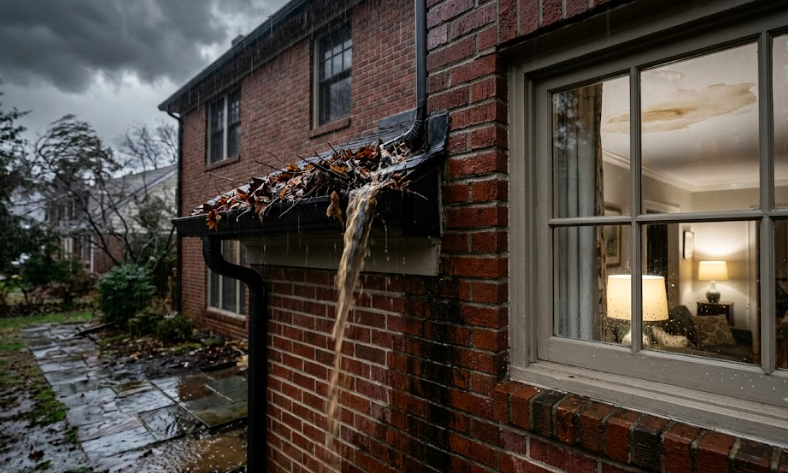
Most homeowners rarely think about their gutters until water starts seeping through the ceiling, walls begin to warp, or a musty smell fills the basement. What many people don’t realize is that clogged gutters are one of the leading causes of interior water damage in residential homes.
At Hazard Cleanup Phoenix, we see the aftermath of neglected gutters more often than you’d think. This guide breaks down exactly how clogged gutters lead to serious water damage inside your home and, more importantly, what you can do to stop it before it becomes a costly disaster.
What Do Gutters Actually Do?
Gutters are your home’s first line of defense against rainwater. They channel water away from your roof, walls, and foundation, directing it through downspouts and safely away from your property.
When gutters are functioning correctly, they:
- Prevent water from pooling on your roof
- Protect your fascia boards and soffit from rot
- Direct water away from your home’s foundation
- Reduce soil erosion around your property
But when gutters get clogged with leaves, twigs, dirt, and debris all of that changes.
How Clogged Gutters Lead to Water Damage Inside Your Home
1. Roof Damage and Ceiling Leaks
When gutters are blocked, water has nowhere to go. It backs up onto the roof, pooling in low spots and working its way underneath shingles and roofing materials. Over time, this standing water causes:
- Shingle deterioration and rot
- Damaged roof decking (the wooden boards beneath your shingles)
- Water infiltration into your attic
- Ceiling stains and active leaks inside your home
You might notice dark water stains on your ceiling or peeling paint both telltale signs that water is making its way in from a clogged, overflowing gutter above.
2. Fascia and Soffit Rot
The fascia board runs along the edge of your roofline it’s what your gutters are actually attached to. When gutters overflow due to a clog, water constantly drips and soaks into the fascia and soffit (the underside of your roof overhang).
This persistent moisture causes the wood to rot from the outside in. Once the rot sets in, it creates pathways for water to travel directly into your attic space and wall cavities leading to interior damage that’s expensive to repair and nearly invisible until it’s severe.
3. Wall and Siding Water Infiltration
Overflowing gutters don’t just drip they cascade sheets of water down the side of your home. This constant exposure saturates your siding, seeps behind it, and works its way into your wall insulation and framing.
Signs of water infiltration through walls include:
- Bubbling or peeling interior paint
- Soft or warped drywall
- Water stains along the base of walls
- Mold growth inside wall cavities
Once water gets inside your walls, the damage spreads fast. Mold can begin growing within 24 to 48 hours of moisture exposure, according to the U.S. Environmental Protection Agency (EPA) – making a quick response absolutely critical.
4. Foundation Damage and Basement Flooding
This is perhaps the most severe consequence of clogged gutters. When downspouts are blocked or gutters overflow, water dumps directly at the base of your home instead of being channeled away. Over time, this saturates the soil around your foundation, leading to:
- Hydrostatic pressure against your foundation walls
- Cracks in your foundation
- Water seeping into your basement or crawl space
- Efflorescence (white mineral deposits on concrete walls)
- Basement flooding
Foundation repairs are among the most expensive home repairs a homeowner can face often ranging from $5,000 to $50,000 or more depending on severity. What started as a clogged gutter can quickly escalate to a six-figure structural problem.
5. Mold and Mildew Growth
All of the water damage scenarios above share one common consequence: mold. Mold thrives in damp, dark spaces exactly the conditions created when water infiltrates your walls, attic, basement, or crawl space.
Mold isn’t just a structural problem it’s a health hazard. Prolonged exposure to mold spores can cause:
- Respiratory issues and chronic coughing
- Allergic reactions and skin irritation
- Headaches and fatigue
- Serious illness in individuals with weakened immune systems
Once mold takes hold inside wall cavities or behind drywall, remediation requires professional intervention. If you’re dealing with active water damage or suspect mold growth, reach out to a qualified water damage restoration team immediately. Our colleagues at Lake Charles Water Damage Restoration understand firsthand how quickly interior water damage can spiral and offer professional restoration services for homeowners dealing with the aftermath.
Warning Signs Your Gutters Are Causing Water Damage
Don’t wait for a catastrophic leak. Watch for these early warning signs:
- Water stains on ceilings or walls especially after heavy rain
- Peeling paint or wallpaper near exterior walls
- Musty or earthy odors in your basement, crawl space, or attic
- Visible mold or dark spots in corners, near windows, or along baseboards
- Gutters visibly overflowing during rain or sagging under debris weight
- Soil erosion or puddles forming directly against your home’s foundation
- Rust stains or water marks on your siding beneath the gutterline
If you’re noticing any of these signs, act quickly. The longer water damage goes unaddressed, the worse and more expensive it becomes.
How to Stop Clogged Gutters From Damaging Your Home
Clean Your Gutters at Least Twice a Year
The simplest prevention measure is regular gutter cleaning at minimum in the spring and fall. If you have nearby trees, you may need to clean them more frequently. Remove all leaves, twigs, shingle grit, and debris. Flush gutters with a garden hose to confirm water flows freely toward the downspout.
Inspect Gutters After Major Storms
Heavy wind and rain can deposit a surprising amount of debris into gutters very quickly. Get in the habit of inspecting your gutters after major storms and clearing any blockages before the next rainfall.
Check and Clear Downspouts
A downspout clog is just as dangerous as a gutter clog but often harder to spot. Run water from a hose into the top of the downspout to test flow. If water backs up or barely drains, the downspout is blocked and needs clearing.
Ensure Downspouts Extend Away From the Foundation
Your downspout should direct water at least 4–6 feet away from your home’s foundation. If your downspout empties right at the base of your home, add a downspout extension or splash block to redirect water to a safe distance.
Install Gutter Guards
Gutter guards are mesh or screen covers that fit over the top of your gutters to keep large debris out while allowing water to flow through. They won’t eliminate gutter maintenance entirely, but they significantly reduce how often gutters clog and how much debris accumulates.
Check Gutter Slope and Alignment
Gutters that are improperly sloped or have pulled away from the fascia won’t drain properly even when debris-free. Gutters should slope approximately 1/4 inch for every 10 feet toward the downspout. Check for sagging sections or gutters that have separated from the roofline and re-secure or re-align as needed.
Inspect Your Roof and Attic Annually
Even with well-maintained gutters, it’s smart to inspect your roof and attic once a year for early signs of water intrusion especially after a wet season. Look for staining, soft spots, or visible daylight in the attic that could indicate compromised roofing materials.
What to Do If Water Damage Has Already Occurred
If you’ve discovered interior water damage whether from clogged gutters or another source here’s what to do immediately:
- Stop the source – clear the gutter clog or block water entry if possible
- Document everything – photograph damage for insurance purposes
- Remove standing water – use a wet-dry vacuum or mop to limit spread
- Dry the area – open windows, run fans, and use dehumidifiers
- Call a professional – water damage inside walls, ceilings, or your foundation needs expert assessment and remediation
Water damage restoration professionals have the equipment to detect hidden moisture, dry structural materials properly, and prevent mold from taking hold. Don’t attempt to simply paint over stains or replace drywall without fully drying and treating the underlying structure hidden moisture always leads to mold.
For homeowners across the Gulf Coast region also dealing with water damage from storms and flooding, the team at Lake Charles Water Damage Restoration provides expert restoration services to help get your home back to pre-loss condition.
Why Phoenix Homeowners Shouldn’t Ignore Gutters
You might be thinking Phoenix doesn’t get much rain, so why do gutters matter?
While it’s true that Phoenix receives less annual rainfall than much of the country, the monsoon season (typically July through September) brings intense, fast-moving storms that can dump significant amounts of rain in a very short time. A single monsoon storm can overwhelm a clogged gutter system instantly, sending water rushing against your foundation, walls, and roof all at once.
In Phoenix, the consequences of clogged gutters during monsoon season are especially severe because:
- Desert soil doesn’t absorb water quickly increasing surface runoff
- Dry, cracked foundations are especially vulnerable to sudden water exposure
- Extreme heat causes gutter sealants to degrade faster
- Dust and desert debris clog gutters faster than many homeowners expect
Don’t be caught off guard when the monsoons arrive. A little gutter maintenance goes a long way toward protecting your Phoenix home.
Final Thoughts
Clogged gutters might seem like a minor inconvenience, but the water damage they can cause inside your home is anything but minor. From ceiling leaks and wall rot to foundation failure and toxic mold, the chain of destruction that begins with a simple blocked gutter can cost tens of thousands of dollars to repair.
The good news? It’s entirely preventable with routine maintenance and a little vigilance.
If you’ve already discovered water damage in your Phoenix home, don’t wait contact the professionals at Hazard Cleanup Phoenix today. We specialize in water damage assessment, remediation, and restoration to get your home safe, dry, and protected.
Leave a Reply