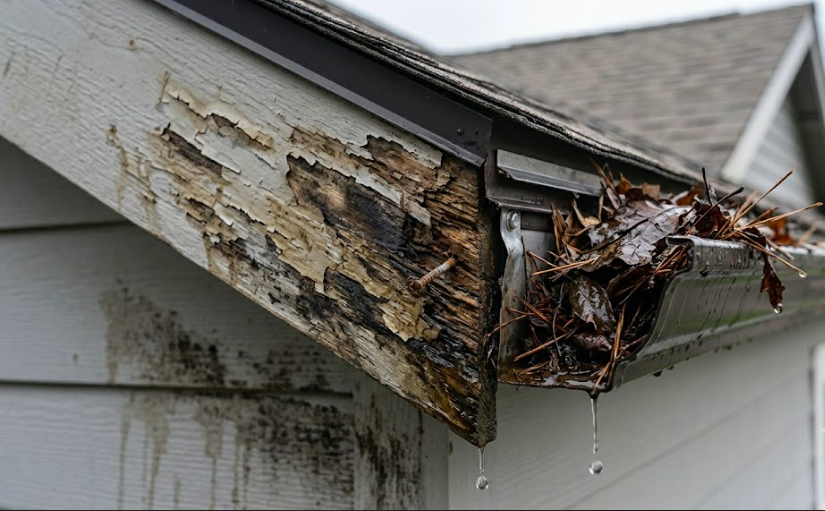
Your fascia board is the long, straight board running along the roof edge, right behind your gutters. It looks like trim, but it does real work. It caps the rafter ends, supports the lower row of shingles, and carries the weight of your gutter system.
When fascia starts to rot, that is rarely a cosmetic problem. It usually means water has been getting where it should not be for months, sometimes years. The good news is that fascia rot gives clear warning signs. The bad news is that most homeowners miss them until the damage has spread.
What Fascia Rot Looks Like
Catch these early and repairs stay small:
- Peeling or bubbling paint along the roofline
- Soft, spongy wood when you press it with a screwdriver tip
- Dark staining or streaks below the gutter line
- Gutters pulling away or sagging between hangers
- Gaps or cracks where the fascia meets the soffit
- Insects, mold, or f ungal growth along the board
If a screwdriver sinks into the wood without much effort, the board has already lost its structural strength.
The 5 Most Common Causes of Rotting Fascia
1. Clogged or Overflowing Gutters
Leaves, shingle grit, and debris block water flow. The water backs up and spills over the gutter edge, soaking the fascia from behind and below. This is the most common cause by far.
2. Missing or Failed Drip Edge
Drip edge is the metal flashing that directs roof runoff into the gutter. Without it, water wicks behind the gutter and runs straight onto the top of the fascia board.
3. Poorly Pitched or Detached Gutters
Gutters that sag hold standing water against the board. Loose gutters also leave gaps where rain gets behind them.
4. Roof Leaks and Ice Dams
Damaged shingles, bad flashing, or ice dams push water under the roof edge and into the fascia and rafter tails.
5. Unsealed or Unprimed Wood
Raw wood edges, cut ends, and old paint failures let moisture soak in. Repeated wet-dry cycles break the wood down fast.
How Fascia Rot Spreads to Your Roof and Walls
Rotting fascia is the first domino. Here is how the damage typically travels:
| Stage | What Happens | What It Affects |
|---|---|---|
| 1. Surface rot | Water saturates the fascia board | Paint, trim, gutter attachment |
| 2. Structural decay | Rot reaches rafter tails and the roof deck edge | Roof sheathing, shingle support |
| 3. Soffit and attic intrusion | Water and pests enter through damaged soffit | Insulation, attic framing, ventilation |
| 4. Wall penetration | Moisture runs down the top of exterior walls | Siding, wall cavities, interior drywall |
Once moisture reaches the attic or wall cavity, you can have hidden mold growth, damaged insulation, and stained ceilings or walls before you ever see a leak indoors. The EPA notes that moisture control is the key to preventing mold growth in buildings, and a leaking roof edge is exactly the kind of persistent moisture source that feeds it.
When Fascia Damage Becomes Water Damage Inside the Home
If you see brown stains on upper-floor ceilings, bubbling paint near exterior walls, or a musty smell in the attic, the problem has probably moved past the fascia. At that point, fixing the board alone is not enough. Wet insulation, drywall, and framing need to be dried and treated properly.
For homeowners dealing with this level of damage, a professional team offering water damage restoration in McAllen can assess moisture levels, dry affected materials, and prevent mold from taking hold.
Repair or Replace? A Simple Guide
| Condition | Best Action |
|---|---|
| Minor paint failure, wood still solid | Scrape, prime, repaint, fix the water source |
| Small soft area (under about 12 inches) | Cut out and splice in new treated wood |
| Widespread softness or rot | Full board replacement |
| Rot reaching rafter tails or roof deck | Structural repair before replacing fascia |
| Repeated rot in the same spot | Fix drainage, drip edge, or roof flashing first |
Material tip: Consider PVC, composite, or aluminum-wrapped fascia for areas with heavy rain or humidity. They resist moisture far better than bare wood. Always prime and seal every cut edge of any wood you install.
How to Prevent Fascia Rot
- Clean gutters at least twice a year, more often if trees overhang the roof.
- Check that gutters slope toward downspouts and hangers are secure.
- Install or repair drip edge so runoff goes into the gutter, not behind it.
- Inspect after major storms for loose, cracked, or stained boards.
- Repaint or reseal exposed wood every few years.
- Address roof leaks quickly. The National Roofing Contractors Association offers guidance on roof edge and flashing performance.
For a deeper look at how wood breaks down when it stays wet, the USDA Forest Products Laboratory publishes research on wood decay and moisture protection.
Frequently Asked Questions
How long does fascia board last?
Painted wood fascia typically lasts 20 to 30 years with good maintenance. Constant moisture exposure can cut that dramatically.
Can I just paint over rotted fascia?
No. Paint hides the problem but does not stop decay. Soft or rotted wood must be removed and replaced.
Does rotting fascia cause roof leaks?
Yes, it can. As rot spreads to the roof deck edge and rafters, water finds easier paths into the attic and wall cavities.
Is fascia rot a DIY repair?
Small spot repairs can be DIY for experienced homeowners. Anything involving the gutter system, roof edge, or structural wood is safer with a professional.
What is the difference between fascia and soffit?
Fascia is the vertical board along the roof edge. Soffit is the underside panel beneath the overhang. Both protect the roof structure and often fail together.
Final Thoughts
A rotting fascia board is your home telling you that water is going somewhere it should not. Fix the cause (gutters, drip edge, drainage, or roof flashing) and replace the damaged wood, and you protect your roof, your walls, and your budget. Ignore it, and a small trim repair can turn into a structural and interior moisture problem.
If your gutters are sagging, overflowing, or pulling away from the roofline, a professional inspection from Clearwater Gutter Repair can help you catch problems before they spread.
Leave a Reply