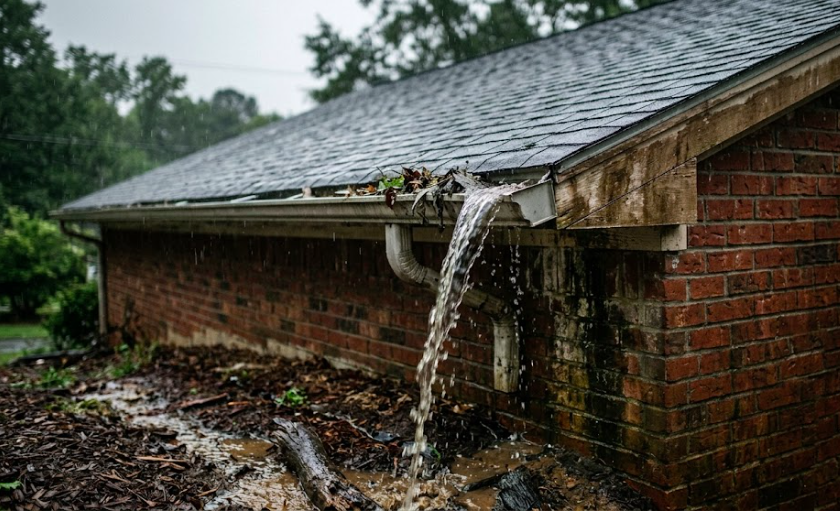
Most homeowners think of gutters as a low-maintenance afterthought something to clean once or twice a year and forget about. But here’s the hard truth: gutters are your home’s first line of defense against water intrusion, and when they fail, the damage doesn’t always show up right away. It hides.
It hides inside your walls. Underneath your flooring. Behind your fascia boards. In your crawl space. In your basement. And by the time you finally see it, you’re no longer dealing with a gutter problem you’re dealing with a full-scale water damage restoration emergency.
According to the Insurance Information Institute, water damage and freezing account for nearly 29% of all homeowner insurance claims making it one of the most common and costly sources of home damage in the United States. A large portion of those claims trace back to something as simple and preventable as a failing gutter system.
This post breaks down the 5 most telling signs that your gutters have already caused hidden water damage to your home and what you need to do the moment you spot them. Whether you’re in a storm-prone region, dealing with heavy seasonal rainfall, or just haven’t had your gutters inspected in a while, this guide is for you.
Why Gutters Matter More Than You Think
Before diving into the warning signs, let’s get clear on what gutters actually do and what happens when they stop doing it.
Your gutter system is engineered to collect rainwater from your roof and channel it away from your home’s foundation, siding, and landscaping through a network of troughs, downspouts, and drainage points. When everything is functioning correctly, even a heavy rainstorm passes without incident.
But gutters can fail in multiple ways:
- Clogging from leaves, debris, and shingle granules
- Sagging due to weight from standing water or improper hangers
- Pulling away from the fascia board
- Cracking or splitting at seams and joints
- Improper pitch causing water to pool instead of drain
- Undersized or missing downspout extensions
Any one of these failures even a minor one can redirect thousands of gallons of water per year toward parts of your home that were never designed to handle that kind of moisture exposure. The result is damage that builds quietly over months or even years before it becomes visible.
Let’s look at the five signs that the damage has already begun.
Sign #1: Staining, Streaking, or Peeling Paint on Your Exterior Walls
One of the earliest and most overlooked indicators of gutter-related water damage is discoloration or paint failure on your home’s exterior siding.
When gutters overflow, water doesn’t just fall straight down. It splashes against your siding, seeps behind your trim, and runs down your walls in invisible sheets. Over time, this constant moisture exposure causes:
- Dark vertical streaks running down from the roofline
- Chalky white mineral deposits on brick or stucco
- Peeling, bubbling, or flaking paint especially near the roofline
- Mold or algae staining green, black, or brown patches on siding
Here’s why this matters beyond aesthetics: paint and siding are not waterproof barriers. They’re moisture-resistant at best. When water gets behind siding, it begins saturating the wood sheathing, wall cavities, and insulation behind it. That moisture doesn’t evaporate quickly especially in areas without good airflow. Instead, it lingers, creating the perfect environment for mold growth, wood rot, and structural decay.
What to Do
Don’t just repaint. Repainting over a moisture problem is like putting a bandage over an infected wound it masks the symptom without treating the cause. If you’re seeing exterior staining paired with overflowing or damaged gutters, you need to:
- Inspect and repair or replace your gutter system
- Have a water damage professional assess the wall cavity for moisture intrusion
- Address any mold or rot before re-siding or repainting
Catching this early can be the difference between a $500 gutter repair and a $15,000 wall remediation project.
Sign #2: Foundation Cracks, Bowing Walls, or a Wet Basement
This is where gutter failure gets truly serious and truly expensive.
Your home’s foundation was designed with drainage in mind. The ground around your home is typically graded to slope away from the foundation, and your gutter downspouts are supposed to deliver water well away from the structure. When downspouts are clogged, disconnected, or too short, water dumps right at the base of your foundation.
Over time, that water:
- Saturates the soil directly adjacent to your foundation
- Creates hydrostatic pressure the literal weight of waterlogged soil pushing against your foundation walls
- Seeps into foundation cracks and freeze-thaws through winter, widening them
- Undermines the soil beneath footings, leading to settlement
The signs of foundation water damage include:
- Horizontal or stair-step cracks in concrete block or brick foundations
- Bowing or leaning walls in your basement
- Efflorescence white chalky deposits left by minerals in water that has seeped through concrete
- Puddles, dampness, or musty odors in your basement or crawl space
- Doors or windows that suddenly stick or won’t close properly (a sign of structural shifting)
According to the Foundation Repair Network, foundation repairs in the United States average between $4,500 and $15,000 and in severe cases, full stabilization projects can run well above $30,000. In nearly all cases, the root cause is water and a large percentage of those cases trace back to inadequate gutter and drainage systems.
What to Do
If you’re seeing any foundation warning signs, do not delay. This is not a DIY situation. Get a structural engineer or foundation specialist to assess the damage. Meanwhile, have your gutters inspected, cleaned, and repaired, and make sure your downspout extensions are directing water at least 4–6 feet away from the foundation.
If your basement or crawl space already has standing water or persistent moisture, contact a water damage restoration company immediately. Prolonged moisture in enclosed spaces leads to mold colonization within 24 to 48 hours and mold remediation on top of foundation repair is a compounding expense that grows fast.
Sign #3: Rotting Fascia Boards, Soffits, or Roof Decking
The fascia is the long board that runs along the lower edge of your roofline it’s what your gutters are physically attached to. The soffit is the underside of your roof overhang. When gutters fail, these two components take the brunt of the damage.
Here’s the pattern: an overflowing or overloaded gutter stays full of standing water. That water sits against the fascia day after day, soaking into the wood. The back of the gutter which is sealed against the fascia traps moisture in an environment with no airflow and no opportunity to dry. The fascia begins to rot from the inside out.
You may not notice until:
- The gutter starts pulling away from the roofline because the rotted fascia can no longer hold the screws
- You see soft, spongy, or discolored wood along the roofline when you get close
- Paint is peeling specifically around the gutter edges
- You find carpenter ants, termites, or other wood-boring insects which are almost always a sign of decayed wood
But it gets worse. Once the fascia rots, moisture can wick upward under the roof shingles and into the roof decking (the plywood or OSB layer beneath your shingles). Rotten roof decking compromises the structural integrity of your entire roof system and now you’re looking at a partial or full roof replacement in addition to your gutter and fascia work.
The National Roofing Contractors Association (NRCA) consistently cites poor drainage and gutter maintenance as a leading cause of premature roof failure and structural water damage in residential properties.
What to Do
Have a roofing contractor inspect your fascia and soffit boards as part of any gutter inspection. If rot is already present, the boards need to be replaced before new gutters are installed otherwise, you’re just mounting new gutters onto a crumbling substrate and the problem will return.
If you suspect moisture has reached your roof decking, a more thorough roof inspection with moisture readings is warranted. Acting on rotted fascia before the decking is compromised is almost always a fraction of the cost.
Sign #4: Soil Erosion, Landscape Damage, or Mulch Washout Around Your Foundation
Walk around the perimeter of your home after a heavy rain. What do you see near your downspouts and along the drip line beneath your gutters?
If you’re seeing:
- Bare, eroded trenches in the soil directly below the gutter line (a sign gutters are overflowing)
- Mulch, gravel, or topsoil washed away around your foundation plantings
- Pooling water that lingers for hours after rain stops
- Dead or struggling plants in areas that get hit by overflow runoff
- Gullies or channels carved into your lawn leading away from the house
…your gutters are failing to contain and redirect water properly, and that runoff is slowly altering the grade and drainage around your home.
This matters because proper grading is what keeps water flowing away from your foundation. When gutter overflow erodes the soil around your foundation, two things happen: the grading flattens or reverses (water now flows toward your home instead of away), and the soil’s capacity to absorb and buffer heavy rain is compromised.
Over time, this creates a self-reinforcing cycle: poor gutter drainage causes erosion, erosion worsens drainage, and more and more water finds its way toward your foundation with every rainstorm.
What to Do
First, fix the gutters extend downspouts, clear blockages, add splash blocks or underground drainage pipes to move water away from the structure. Then, regrade the soil around your foundation to restore a proper slope (ideally 6 inches of drop over the first 10 feet away from the house, as recommended by most building codes).
In areas with chronic drainage issues, consider installing a French drain system or working with a landscaping professional to engineer a more permanent drainage solution.
Sign #5: Mold Spots, Musty Odors, or Moisture Readings Inside Your Home
This is the sign that most homeowners notice last but it’s the one that should prompt the most urgent action.
If you’re experiencing:
- A persistent musty or earthy smell in your basement, crawl space, or any room adjacent to an exterior wall
- Visible mold or mildew on interior walls, baseboards, or in closets along exterior walls
- Condensation on interior walls during rain events
- Warped, buckling, or stained drywall or plaster
- Peeling wallpaper or paint bubbling on interior walls
- Elevated humidity readings (above 60% RH) inside your home
…then water has already penetrated your building envelope, and you are likely dealing with active water damage and potentially active mold growth.
Mold is not a cosmetic issue. The Centers for Disease Control and Prevention (CDC) has documented that exposure to mold can cause respiratory issues, allergic reactions, and in the case of certain mold species like Stachybotrys chartarum (black mold), more serious health effects particularly in children, the elderly, and people with respiratory conditions.
The critical thing to understand is that you cannot see most mold. A small visible patch on a baseboard is often the tip of an iceberg the bulk of the colony is inside the wall cavity, growing on the paper facing of drywall, the insulation batts, and the wood framing behind it. By the time it’s visible, remediation is no longer optional.
What to Do
If you’re seeing any interior signs of moisture intrusion linked to gutter overflow, this needs to be treated as an emergency. Do not attempt DIY mold removal for anything beyond a small surface area improper remediation can spread spores and make the problem significantly worse.
Contact a certified water damage restoration company immediately. They will conduct moisture mapping using professional-grade equipment (thermal imaging, moisture meters, hygrometers) to identify the full extent of the intrusion including areas you can’t see. Once the source is controlled and the scope is established, professional drying, demolition of damaged materials, and mold remediation can begin.
For homeowners in the Rio Grande Valley and surrounding South Texas area, mcallentxwaterdamage.com provides emergency water damage restoration services including moisture assessment, structural drying, mold remediation, and full coordination with your insurance carrier. Don’t wait on this every day of delay allows mold to spread further and damage to compound.
The Hidden Cost Multiplier: Why Delayed Action Always Costs More
One of the most consistent findings in the water damage restoration industry is that delay dramatically multiplies repair costs. A small moisture intrusion that costs $800 to remediate in week one can become a $12,000 mold remediation and drywall replacement project by week eight.
This is because:
- Mold colonies double in size rapidly once established in a moisture-rich environment
- Wood rot is progressive once fungal decay begins, it spreads into adjacent framing members
- Insurance carriers may deny claims if they determine the damage resulted from long-term neglect rather than a sudden event
- Structural repairs compound when multiple systems are affected (foundation + framing + insulation + drywall + flooring)
The math is simple: a gutter cleaning costs $150–$300. A gutter repair or replacement costs $1,000–$3,000. The downstream water damage those gutters cause unchecked can cost $10,000 to $50,000 or more. Preventive maintenance and early response are not just smart home ownership they’re financially essential.
How to Inspect Your Gutters for Early Warning Signs
You don’t have to wait for a contractor to know whether your gutters are at risk. Here’s a simple DIY inspection checklist you can run yourself:
From the Ground (safe for any homeowner):
- Walk the perimeter of your home during or immediately after heavy rain are gutters overflowing anywhere?
- Look for sagging sections, sections pulling away from the fascia, or visible gaps at seams
- Check for erosion channels in the soil directly beneath the gutter line
- Look at downspouts are they discharging at least 4 feet from the foundation?
- Check downspout splash blocks are they in place and directing water away?
From a Ladder (only if you’re comfortable and have proper safety equipment):
- Look inside the gutter for debris buildup, standing water, or shingle granules accumulating at outlets
- Check the gutter pitch water should flow toward downspouts, not pool in the middle
- Inspect the fascia board behind the gutter for soft spots, dark staining, or visible rot
- Check gutter hangers are they spaced properly (every 24–36 inches) and firmly attached?
- Inspect downspout connections are they sealed and secure?
When to Call a Professional:
- Any time you see interior moisture signs (musty smell, mold, staining)
- Any time the fascia appears rotted or the gutter is pulling away significantly
- Any time you have foundation concerns
- Any time you haven’t had a professional inspection in 2+ years
What a Professional Gutter Inspection Covers
A professional gutter inspection goes far beyond what you can see from the ground or a basic ladder check. A qualified gutter contractor will:
- Run a water test flushing the system with a hose to observe flow, identify blockages, and spot slow drainage
- Measure gutter pitch with a level to ensure proper slope toward downspouts
- Inspect all seams, joints, and end caps for cracks, separation, or failed sealant
- Assess hanger and bracket integrity checking for corrosion, loose fasteners, or improper spacing
- Evaluate fascia and soffit condition identifying rot, moisture damage, or pest entry points
- Check downspout placement and extension ensuring water is being discharged far enough from the foundation
- Identify overflow risk assessing whether your gutter size and downspout count are adequate for your roof’s square footage and your area’s rainfall intensity
In South Texas and the Rio Grande Valley, where heavy and sudden rainfall is common, getting a professional inspection at least once a year and after any major storm is especially important.
Gutter Materials and When to Consider Replacement vs. Repair
Not all gutter problems require full replacement. But understanding the lifespan and failure modes of different gutter materials helps you make an informed decision:
| Material | Average Lifespan | Common Failure Modes | Repair vs. Replace |
|---|---|---|---|
| Aluminum (sectional) | 20–30 years | Joint separation, corrosion at seams | Repair if isolated; replace if systemic |
| Aluminum (seamless) | 25–35 years | Sagging, end cap failure | Usually repairable |
| Vinyl | 10–20 years | Cracking in cold, UV degradation | Often replace repairs rarely hold |
| Steel (galvanized) | 20–25 years | Rust at seams and joints | Replace when rust is widespread |
| Copper | 50+ years | Rare mainly mechanical damage | Almost always repairable |
| Zinc | 40–50 years | Rare patina is protective | Almost always repairable |
If your gutters are within their expected lifespan and the issues are isolated a cracked seam, a loose hanger, a single leaking joint repair is usually the right call. If issues are systemic, if the gutters are undersized for your home, or if the material has exceeded its expected lifespan, replacement is the smarter long-term investment.
Prevention: Keeping Your Gutters (and Your Home) Protected Year-Round
Once your gutters are in good shape, keeping them that way is far easier than recovering from neglect. Here’s a year-round maintenance framework:
Spring:
- Clean gutters after winter removing any debris, granules, or buildup from dormant months
- Inspect for freeze-thaw damage (cracks, separated joints, bent sections)
- Check downspout extensions are in place after snow/ice season
Summer:
- Inspect after any major storm especially after high winds that can push debris into gutters
- Trim overhanging tree branches that drop debris into gutters
Fall:
- Clean gutters at least twice once mid-fall and once after peak leaf drop
- Consider gutter guards if debris buildup is a persistent problem
- Ensure downspouts are clear before winter rain season begins
Winter:
- Monitor for ice dam formation at the roofline a sign of heat loss through the roof and potential gutter overflow freezing
- After major snow or ice events, inspect for any mechanical damage
Additionally, consider investing in gutter guards or leaf protection systems particularly if you have significant tree coverage around your home. While no system is 100% maintenance-free, quality gutter guards dramatically reduce cleaning frequency and prevent the debris buildup that leads to overflow and hidden water damage.
Final Thoughts: Gutters Are a Small Investment With Enormous Downstream Impact
There’s a reason professional home inspectors pay close attention to gutters during any property assessment. A properly maintained gutter system is one of the most cost-effective investments in your home’s long-term health. Neglected gutters, by contrast, can quietly trigger a cascade of damage that touches your roof, walls, foundation, interior finishes, and indoor air quality.
The five signs covered in this post exterior staining and paint failure, foundation issues, rotted fascia and roof components, soil erosion and pooling, and interior mold or moisture are your home’s way of telling you that the gutter system has already failed and the damage has already started. Don’t ignore these signals.
If you’re seeing any of these signs and suspect water has already entered your home, the most important step is to get a professional moisture assessment before attempting any cosmetic repairs. Covering up water damage without addressing the underlying intrusion is one of the most common and costly mistakes homeowners make.
Act on your gutters today. The cost of prevention is always a fraction of the cost of restoration.
For homeowners in the McAllen, TX area dealing with water damage caused by gutter failures or storm-related flooding, mcallentxwaterdamage.com offers professional water damage restoration, moisture assessments, and mold remediation services. Contact their team for a prompt evaluation before damage spreads further.
Concerned about the condition of your gutters? Don’t wait for the warning signs to appear schedule a professional gutter inspection today. Visit our Gutter Repair Services page to learn how ClearWater Gutter Repair can protect your home from the hidden damage that starts at your roofline.
Leave a Reply