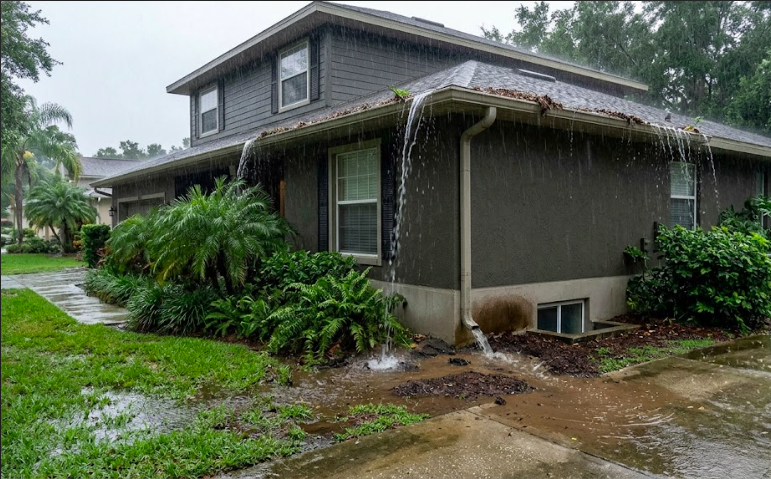
When homeowners think about basement water problems, they often look for leaking pipes, foundation cracks, or groundwater intrusion. However, one important source of excess moisture is sometimes overlooked: the gutter system.
Gutters play an essential role in protecting a home by collecting rainwater from the roof and directing it away from the foundation. When gutters become clogged, damaged, improperly positioned, or disconnected, rainwater can overflow and accumulate around the property. Over time, repeated exposure to excess water can contribute to basement moisture, foundation deterioration, and interior water damage.
For homeowners in Clearwater, Florida, maintaining effective gutter drainage is particularly important during periods of heavy rainfall. Understanding the connection between gutter performance and basement water intrusion can help homeowners identify drainage problems early and protect their properties from preventable moisture damage.
1. How Gutters Protect Your Home’s Foundation
A properly functioning gutter system does more than prevent water from spilling over roof edges. It provides a controlled pathway for collecting and redirecting rainwater away from the house.
When rain falls onto a roof, gutters collect the runoff and carry it toward downspouts. Downspouts then discharge the water at designated locations away from the foundation.
Without an effective drainage system, rainwater can fall directly beside exterior walls, collect around the foundation, and gradually saturate the surrounding soil.
This creates several potential problems:
- Excess moisture accumulating around foundation walls.
- Water entering through existing foundation cracks or vulnerable openings.
- Increased moisture exposure around basement windows and below-grade structures.
- Soil erosion and drainage problems near the house.
- Persistent dampness in basement walls and flooring.
The University of Minnesota Extension identifies defective or missing gutters and downspouts as common contributors to basement moisture problems. Its guide to basement moisture causes and solutions explains why proper gutter drainage and ground grading are important parts of basement moisture prevention.
2. How Poor Gutter Drainage Leads to Basement Water Problems
Gutter problems do not always cause immediate basement flooding. In many cases, water accumulates gradually around the property, creating conditions that increase the possibility of moisture entering below-grade spaces.
Here are some common ways poor gutter drainage can contribute to basement water problems.
Clogged Gutters Cause Water to Overflow
Leaves, twigs, dirt, and other debris can accumulate inside gutters and restrict normal water movement. When rainwater cannot flow freely toward the downspouts, it may spill over the gutter edges.
If this water repeatedly falls close to the home’s foundation, the surrounding soil can become saturated. Excess moisture may eventually find pathways through foundation cracks, joints, or other vulnerable areas.
Regular gutter cleaning helps maintain proper water flow and reduces the risk of overflow during rainfall.
Short or Improperly Positioned Downspouts
Even clean gutters cannot protect a home if the downspouts release water too close to the foundation.
A downspout that ends directly beside an exterior wall can concentrate roof runoff in one location. During repeated rain events, this may cause water to collect around the foundation and increase the amount of moisture entering the surrounding soil.
Downspout extensions, splash blocks, and properly designed drainage outlets can help direct water farther away from the structure.
Sagging or Damaged Gutters Disrupt Water Flow
Gutters need appropriate alignment and slope to carry rainwater toward their outlets. Loose brackets, sagging sections, separated joints, and damaged connections can interrupt this process.
Instead of flowing toward the downspouts, water may collect inside low sections or escape through openings.
Over time, repeated water discharge near exterior walls can contribute to soil saturation, exterior wall moisture, and basement water concerns.
Improper Ground Grading Makes Drainage Worse
Gutters are only one part of a property’s drainage system. The ground surrounding a house also needs to direct surface water away from the foundation.
If the soil slopes toward the building, rainwater discharged from gutters may flow back toward the basement walls instead of moving away from the property.
Combining properly maintained gutters with suitable ground grading helps reduce unnecessary water accumulation around foundation areas.
3. Warning Signs That Poor Gutter Drainage May Be Affecting Your Basement
Basement moisture problems can develop gradually, making early warning signs easy to overlook. Homeowners should pay attention to changes inside the basement as well as drainage conditions outside.
Some common signs include:
Damp Basement Walls: Moisture appearing along lower wall sections may indicate water entering through foundation materials or nearby openings.
Water Stains on Walls: Brownish discoloration, mineral deposits, or recurring damp patches can suggest ongoing moisture exposure.
Musty Odors: Persistent musty smells may indicate elevated moisture levels or possible microbial growth in affected materials.
Standing Water on the Basement Floor: Water collecting near foundation walls, floor joints, or basement corners may indicate an ongoing water intrusion problem.
Peeling Paint and Bubbling Wall Finishes: Excess moisture behind painted surfaces can cause finishes to deteriorate, separate, or discolor.
Visible Mold Growth: Persistent dampness can create conditions suitable for mold growth on drywall, wood, carpeting, and other materials.
These symptoms do not automatically mean that gutters are responsible. Plumbing leaks, groundwater pressure, foundation defects, and other drainage issues can produce similar conditions. Identifying the actual source is important before choosing a repair approach.
4. Why Repeated Water Exposure Can Damage Foundation Materials
When rainwater continually collects around a foundation, the surrounding soil may remain saturated for extended periods.
As moisture builds up, water can move through small openings, foundation joints, porous masonry, and existing cracks. Depending on the foundation design and surrounding conditions, this may contribute to recurring basement dampness or water intrusion.
Prolonged moisture exposure can also affect materials inside the basement.
Potential consequences include:
- Deterioration of drywall and interior wall finishes.
- Damage to carpeting, flooring, and stored belongings.
- Deterioration of wooden trim and framing materials.
- Persistent humidity and unpleasant odors.
- Conditions that encourage mold growth.
- Damage to basement furnishings and finished living spaces.
The EPA’s Moisture Control Guidance for Building Design, Construction and Maintenance explains how rainwater, groundwater, and improper site drainage can contribute to moisture problems in foundations and buildings.
Addressing drainage concerns early can help reduce repeated moisture exposure and protect vulnerable building materials.
5. How to Improve Gutter Drainage and Reduce Basement Water Risks
Preventing water accumulation around a foundation starts with maintaining the exterior drainage system.
Homeowners can take several practical steps to improve gutter performance.
Clean Gutters Regularly
Remove accumulated leaves, twigs, dirt, and other debris that restrict water movement. Check the entire gutter system, including corners and downspout openings.
Gutters should be inspected more frequently when nearby trees shed leaves or when storms introduce additional debris.
Check Downspout Discharge Locations
Make sure downspouts direct water away from the foundation rather than releasing it beside exterior walls.
Downspout extensions or suitable drainage outlets can help move roof runoff toward an appropriate discharge location. The discharge point should not direct water onto neighboring properties or create drainage problems elsewhere.
Repair Loose or Damaged Gutter Sections
Look for sagging sections, loose fasteners, leaking joints, separated connections, and visible corrosion.
Damaged sections should be repaired or replaced as needed to restore proper water flow.
Maintain Proper Ground Slope
Check the soil around the home’s exterior walls for low spots where rainwater collects.
Where necessary, improve grading so that surface water moves away from the foundation. Avoid creating drainage patterns that redirect water toward neighboring properties.
Inspect the System After Heavy Rainfall
Observing the gutter system during or shortly after rainfall can help identify problems that may not be obvious during dry weather.
Look for overflowing sections, disconnected downspouts, water pooling near the house, and areas where runoff collects beside the foundation.
Consider Professional Gutter Inspection
If gutters continue overflowing, separating, or draining improperly despite routine cleaning, a professional inspection may help identify the underlying problem.
Correcting the gutter issue before repeated rainfall causes additional moisture exposure can help protect the property’s exterior and foundation.
6. What to Do When Water Has Already Entered Your Basement
Improving gutter drainage is important, but it does not automatically resolve water damage that has already occurred inside a basement.
If water has entered the property, homeowners should first identify and address the source of the intrusion. Depending on the situation, this may involve gutter repairs, downspout adjustments, grading improvements, foundation repairs, or other drainage solutions.
Once the source has been addressed, the affected interior areas should be evaluated.
Consider these steps:
- Document the damage: Photograph standing water, wet flooring, wall stains, damaged belongings, and other visible signs of moisture.
- Protect personal safety: Avoid entering flooded areas if electrical equipment, outlets, or wiring may be affected. Contact qualified professionals when electrical hazards are suspected.
- Remove standing water safely: Appropriate water extraction may be necessary depending on the amount and source of water.
- Inspect affected materials: Drywall, insulation, carpeting, wood, and other materials may retain moisture even after visible water is removed.
- Arrange appropriate drying and cleanup: Professional restoration may be necessary when water has spread into building materials or affected concealed spaces.
For property owners experiencing water intrusion and interior damage in Northeast Ohio, Akron water damage restoration services can provide information about professional water damage cleanup, moisture assessment, water extraction, and structural drying.
The important distinction is that repairing the exterior drainage problem helps prevent additional water intrusion, while proper restoration addresses the moisture and damage already present inside the property.
7. Why Gutter Maintenance Matters for Clearwater Homeowners
Homes in Clearwater and the surrounding Tampa Bay area can experience periods of heavy rainfall that place additional demands on exterior drainage systems.
When gutters are clogged or downspouts are not directing water away effectively, roof runoff can collect around the property and contribute to drainage concerns.
Routine maintenance can help homeowners identify developing problems before they become more serious.
A practical gutter maintenance routine should include:
- Checking gutters for debris and obstructions.
- Inspecting downspouts for blockages and disconnected sections.
- Looking for gutter leaks, sagging, and loose attachments.
- Checking for water pooling near exterior walls.
- Observing how rainwater moves across the property.
- Inspecting basement walls and floors for recurring moisture signs.
Keeping gutters and downspouts in good condition is an important part of an overall home water management strategy.
Protect Your Foundation by Maintaining Proper Gutter Drainage
Poor gutter drainage can contribute to basement water problems by allowing rainwater to overflow, collect near foundation walls, and saturate the surrounding soil. Although gutter issues are not the only possible cause of basement moisture, they are an important part of the exterior drainage system that homeowners should not overlook.
Regular cleaning, timely gutter repairs, properly positioned downspouts, and suitable ground grading can help manage roof runoff and reduce unnecessary moisture exposure around the foundation.
If your gutters are overflowing, sagging, or draining too close to your home, addressing those problems early can help prevent more serious drainage concerns.
For gutter inspection, maintenance, and repair information, visit Clearwater Gutter Repair and take steps toward keeping rainwater moving away from your home.
Leave a Reply