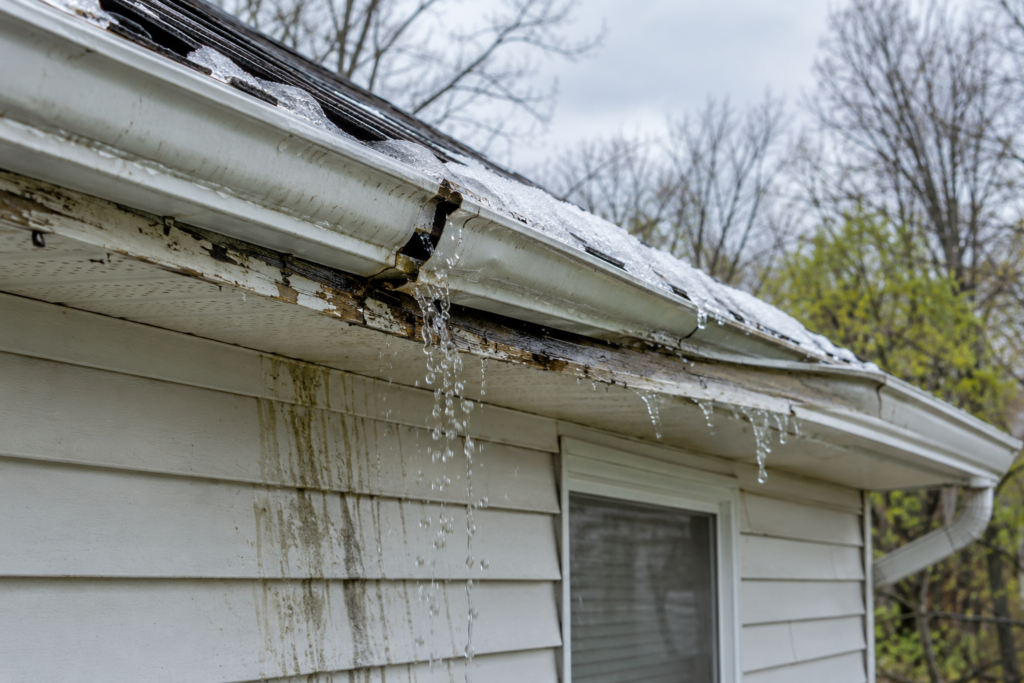
Spring feels like a relief the snow melts, temperatures climb, and the worst of winter seems over. But for your home, the thaw season is often when the real damage begins.
Gutters that survived a full winter of ice, snow load, and freeze-thaw cycles are rarely in the same condition they were in October. And when damaged gutters fail to channel meltwater away from your home, water finds another path usually through your fascia boards, foundation, basement, or crawl space.
Here’s a complete spring inspection checklist to catch gutter damage early, before it becomes a water damage emergency.
Why Spring Is the Most Dangerous Season for Gutter Failure
During winter, gutters take on enormous stress. Ice dams form when heat escapes through your roof, melts snow, and then refreezes at the cold eaves often directly in or behind your gutters. The expanding ice pries gutters away from fascia boards, cracks seams, and bends hangers out of shape.
Then spring arrives. Suddenly, large volumes of meltwater need to move through a gutter system that may be partially detached, clogged with debris, or cracked along its length. The result: water that overflows, backs up, and infiltrates areas of your home it was never meant to reach.
According to the Insurance Information Institute, water damage and freezing claims account for nearly 24% of all homeowner insurance losses making it one of the most common and costly claims filed each year.
7 Things to Inspect on Your Gutters After Winter
1. Check for Visible Sagging or Pulling Away From the Fascia
Walk the perimeter of your home and look up. Gutters should sit flush and level against the fascia board. If you see any sections bowing downward, pulling away from the house, or visibly tilted, ice or snow load has likely stressed the hanger hardware or the fascia itself.
Why it matters: A sagging gutter pools standing water instead of draining it. Standing water accelerates rust, seam failure, and wood rot on the fascia which can eventually allow moisture behind your siding.
2. Look for Cracks, Holes, and Separated Seams
Inspect the bottom and sides of every gutter run, especially at the joints and corners. Freeze-thaw expansion cycles are brutal on sealant joints, and even aluminum gutters can develop hairline cracks after repeated stress.
Run your hose through the gutters if it’s safe to do so any water that drips or streams from a location other than the downspout indicates a breach.
Tip: Seam separations are particularly common on sectional gutters (as opposed to seamless gutters). If your home has older sectional gutters, prioritize seam inspection.
3. Confirm Downspouts Are Clear and Draining Properly
Downspout clogs are one of the most overlooked causes of gutter overflow. Over winter, debris, shingle granules, and ice can compact inside downspouts and by spring, meltwater has nowhere to go.
Flush each downspout with a garden hose. Water should flow freely and exit at least 4–6 feet from your foundation. If water backs up or drains slowly, the downspout is partially blocked and needs clearing before heavy spring rains arrive.
4. Inspect the Fascia and Soffit for Signs of Water Intrusion
This is the step most homeowners skip and the one that matters most for early water damage detection.
Look for:
- Dark staining or discoloration on fascia boards directly behind the gutter
- Soft, spongy, or peeling wood when you press on the fascia
- Paint bubbling or peeling on soffit panels
- Visible mold or mildew growth under the eave
Any of these signs indicate that water has already been infiltrating behind the gutter system. Left unaddressed, this moisture path leads directly into your attic, wall cavities, and potentially your ceiling.
5. Check the Ground Below Downspouts for Erosion
Look at the soil and landscaping immediately surrounding your downspout exits. Channels cut into the soil, washed-away mulch, or compacted depressions are all signs that water has been overflowing or discharging in concentrated volumes for extended periods.
More critically check the grade. The ground around your foundation should slope away from your home at roughly 1 inch per foot for the first 6 feet. If winter frost heave has disrupted this grade, meltwater may now be pooling against your foundation rather than draining away.
6. Look Inside Your Gutters for Standing Water and Debris
After the snow has cleared, get on a ladder and visually inspect the gutter channel itself. You’re looking for:
- Standing water (indicates negative slope or blockage)
- Leaf and debris buildup that will block flow during spring rain events
- Gutter granules from your shingles a sign your roof shingles are deteriorating and shedding
- Rust spots or white mineral deposits indicating long-term water retention
A properly functioning gutter should be completely empty between rain events. Anything sitting inside it between storms is a problem.
7. Verify Gutter Guards (If Installed) Haven’t Been Displaced
Ice and snow accumulation can bend, pop out, or misalign gutter guards, creating gaps that allow debris inside while also trapping ice. Check that every section of guard is properly seated. A displaced guard can be worse than no guard at all it creates a hidden blockage that’s difficult to detect without close inspection.
For a deeper look at how gutter protection systems interact with water damage risk, the American Society of Home Inspectors (ASHI) provides comprehensive resources on roof drainage system evaluation and what certified inspectors look for during seasonal assessments.
When Gutter Damage Has Already Let Water In
Sometimes the inspection reveals the problem too late moisture has already penetrated.
Signs that gutter overflow or fascia infiltration has reached the interior include:
- Water stains on interior ceilings near the roofline (especially at corners)
- Musty odors in the attic following thaw events
- Efflorescence (white chalky deposits) on basement walls
- Damp or wet basement flooring that appears during or after snowmelt
- Swollen or warped drywall along exterior walls
If you’re seeing any of these signs in an Akron, Ohio home, the source may trace directly back to compromised gutters and fascia from the winter just passed. Akron’s climate with its significant lake-effect snow accumulation and rapid spring temperature swings puts homes at elevated risk for exactly this failure pattern.
Professional water damage restoration should be contacted promptly in these cases. The team at Akron OH Water Damage handles the full scope of residential water intrusion from ceiling and attic moisture to basement flooding and structural drying and can assess whether a failed gutter system has already created interior damage that requires remediation.
The Cost of Waiting
A $15 tube of gutter sealant applied in March can prevent a $4,000–$12,000 water damage remediation job by June. That’s not an exaggeration water is patient, and the damage compounds every week it’s allowed to continue.
The sequence typically looks like this:
- Cracked gutter seam → water behind fascia board
- Saturated fascia → moisture wicking into rafters and wall sheathing
- Extended moisture → mold colonies forming in wall cavities
- Structural saturation → drywall replacement, insulation removal, potential framing repair
Stopping it at step 1 is a repair. Stopping it at step 3 or 4 is a major restoration project.
According to HomeAdvisor’s True Cost Guide, water damage restoration costs average between $1,300 and $5,600 nationally, with severe cases reaching well above that range.
Quick Reference: Spring Gutter Inspection Checklist
| Inspection Point | What to Look For | Risk if Skipped |
|---|---|---|
| Gutter pitch & hangers | Sagging, separation from fascia | Standing water, wood rot |
| Seams & joints | Cracks, separation, visible gaps | Water behind siding |
| Downspouts | Flow restriction, pooling at exit | Foundation infiltration |
| Fascia & soffit | Staining, soft wood, peeling paint | Attic/wall moisture |
| Ground grade | Erosion, pooling against foundation | Basement flooding |
| Gutter interior | Debris, granules, standing water | Blockage overflow |
| Gutter guards | Displacement, debris trapping | Hidden blockages |
Final Word
Your gutters are the first line of defense between your roof and your home’s structural integrity. After every winter especially one with significant snowfall and hard freeze events they deserve more than a visual glance from the driveway.
Do the full inspection. Fix what you find. And if water has already gotten in, act before the damage spreads further.
Have questions about gutter repair, maintenance, or nationwide service coverage? Visit clearwatergutterrepair.com for expert gutter repair resources and service information.
Leave a Reply